 Jul 23, 2026
 How Much Does a Patio Cost in New Orleans?
-
 By Admin
Most patios in New Orleans cost between $10 and $35 per square foot installed...
Read More
Talk to an Expert 504-596-8647

Composite decking usually wins for low maintenance and long-term value in hot, humid climates, while wood offers a lower upfront price and natural look. The right choice depends on your budget, how much upkeep you want, and how the material handles heat and moisture where you live.
A wood deck is built from natural lumber, most often pressure-treated pine, cedar, or a tropical hardwood. A composite deck is manufactured from a blend of recycled wood fibers and plastic, then finished with a protective cap that resists moisture, stains, and fading. That single structural difference drives almost every comparison that follows, from how often you pick up a paintbrush to how the boards feel underfoot in July.
Both materials build a beautiful, functional platform for outdoor living, and both are common choices for the decks we plan and construct. If you are weighing this decision, it helps to start with your priorities before your budget. Visit Big Easy Outdoor Design to see how a professionally designed deck fits into a larger backyard vision, whether you lean toward the warmth of timber or the ease of composite.
The debate over composite deck vs wood deck rarely has one universal answer. A weekend hobbyist who enjoys staining boards each spring may value wood, while a busy family that wants a clean surface with almost no chores tends to prefer composite. Understanding what each material actually asks of you is the honest starting point.
Wood almost always costs less at installation. Pressure-treated lumber is the most affordable framing and surface option, and even premium cedar typically comes in below capped composite per square foot. For homeowners with a fixed budget who want the largest deck footprint possible right now, wood is the practical entry point.
Composite decking benefits show up over the life of the deck rather than on day one. You skip the cost of stain, sealant, and replacement boards, and you avoid the recurring weekends spent applying them. Over fifteen to twenty years, those savings often close the gap and sometimes surpass the initial premium. When we help clients plan their Outdoor Home Decks, we frame the conversation around total cost of ownership, not just the invoice at the end of the build.

This is where climate matters most. In hot, humid Gulf Coast conditions, wood is under constant pressure from moisture, mildew, and sun. It needs regular cleaning, and it requires resealing or restaining every two to three years to prevent rot, warping, and splintering. Skip that upkeep and the deck deteriorates quickly.
Composite handles humidity and rain far better because its capped surface resists mold, moisture absorption, and insect damage. The wood decking pros cons discussion tends to hinge on this point: wood rewards attention and punishes neglect, while composite forgives a busy schedule. The one honest caveat is heat retention. Dark composite boards can get noticeably hotter in direct summer sun than natural wood, so light colors and shaded layouts matter in warm regions. A well-planned pergola or gazebo can cut that heat dramatically while extending your usable hours outdoors.
Wood offers grain, warmth, and a scent that many homeowners love, and it can be stained to nearly any tone. It ages into a natural patina, though that aging is uneven without upkeep. For a certain rustic or traditional look, nothing fully replaces real timber, which is why some of the layouts in our patio layout guide still start with wood as the anchor material.
Modern composite has closed much of the aesthetic gap. Today’s capped boards use multi-tonal streaking and embossed grain patterns that read convincingly as wood from normal viewing distances, and the color stays consistent for decades instead of graying out. You also get design freedom with hidden fasteners, wide plank options, and coordinated railing systems. Pairing a composite deck with a built-in cooking zone is a popular upgrade, and our outdoor kitchen ideas show how the two features work together in a single outdoor room.
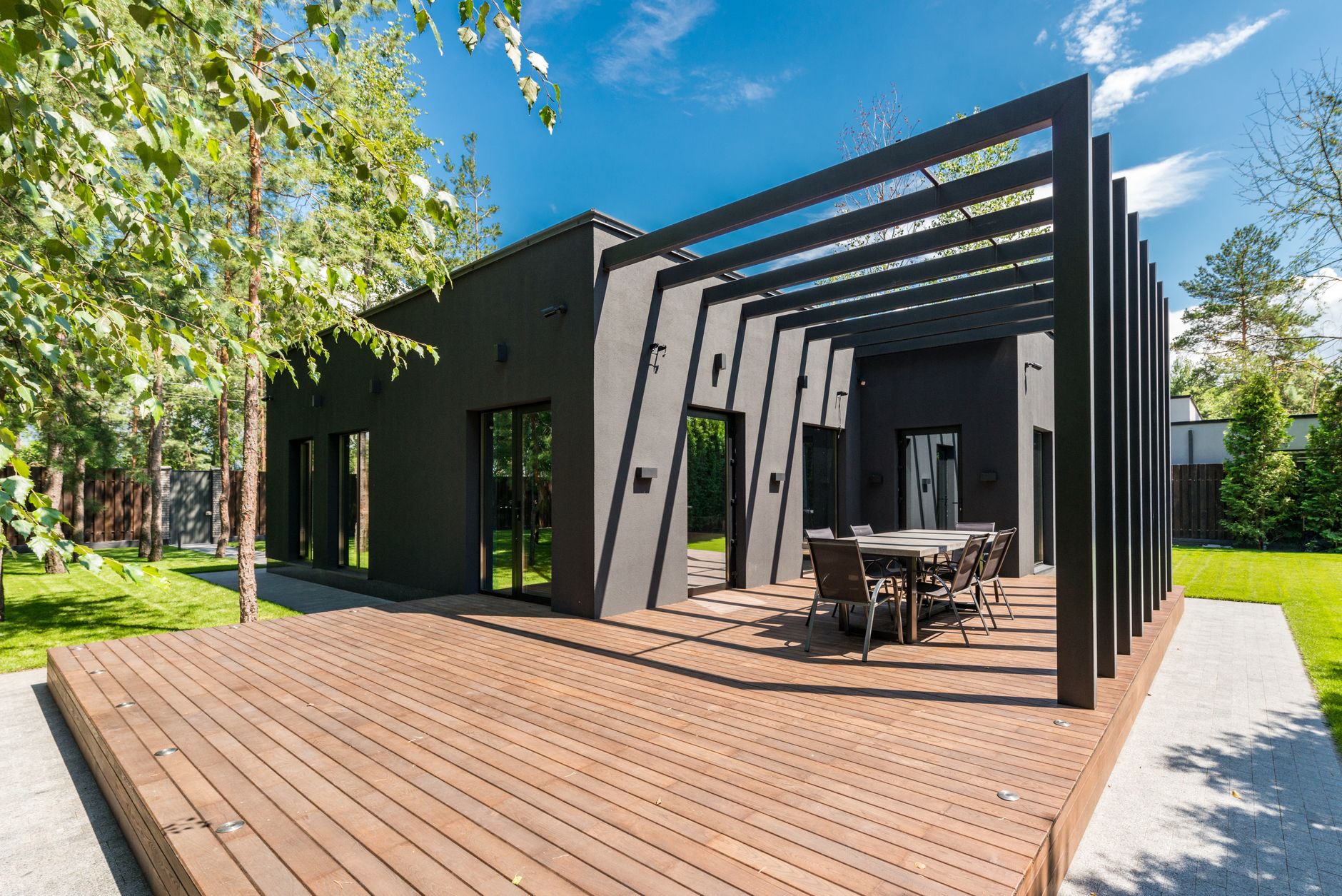
Choosing the best deck material for outdoor living comes down to matching each category against your own priorities. The table below lays out the practical trade-offs so you can see where each material leads and where it lags. No single column wins every row, which is exactly why the decision is personal.
| Category | Composite | Wood |
|---|---|---|
| Upfront Cost | Higher, roughly $30 to $60 per sq ft installed | Lower, roughly $15 to $35 per sq ft installed |
| Lifespan | 25 to 30 years or more | 10 to 15 years with regular upkeep |
| Maintenance | Occasional soap-and-water cleaning, no sealing | Cleaning plus resealing or staining every 2 to 3 years |
| Heat Retention | Hotter in direct sun, especially dark colors | Stays cooler underfoot in full sun |
| Appearance | Consistent color, realistic grain, minimal fading | Natural grain and warmth, ages and grays over time |
| Eco Impact | Often uses recycled content, not biodegradable | Renewable and biodegradable, but requires chemical treatment |
| Warranty | 25 to 50 year manufacturer warranties common | Little to no product warranty beyond treatment |
Start with three questions: How long do you plan to stay in the home, how much maintenance are you willing to do, and how much direct sun does your deck site receive? If you want decades of low-effort use and plan to stay put, composite tends to pay off. If you want a lower upfront cost, love the feel of real timber, and do not mind seasonal upkeep, wood is a sound choice. Many homeowners in warm, humid areas lean composite simply to sidestep the constant fight against moisture and mildew.
Whichever way you lean, the quality of the design and installation matters as much as the material. A deck built on a smart layout, with proper drainage, shade, and flow into the rest of the yard, will outperform a premium board installed poorly. That is the difference professional planning makes, and it is central to how Big Easy Outdoor Design approaches every project. If you are still comparing options, our overview of clever backyard design ideas can help you picture the finished space.
Ready to build a deck suited to the New Orleans climate and your lifestyle? Reach out through our contact page or call (504) 596-8647 to schedule a free consultation with the Big Easy Outdoor Design team.
Composite is better for low maintenance and long-term durability, while wood is better for upfront cost and natural appearance. The best option depends on your budget, upkeep tolerance, and climate. In hot, humid regions, composite often has the edge because it resists moisture and mildew.
Composite decking typically lasts 25 to 30 years or more with minimal care. A wood deck usually lasts 10 to 15 years and only reaches the higher end with consistent cleaning, sealing, and repairs. Humid climates tend to shorten a wood deck’s lifespan.
The main disadvantages are a higher upfront cost and greater heat retention, especially with dark colors in direct sun. Composite is also not biodegradable and can be difficult to repair board by board. Choosing lighter colors and adding shade helps offset the heat concern.
For most homeowners who plan to stay in their home, composite is worth the extra cost because it eliminates staining and sealing expenses over its long life. The upfront premium is often recovered through lower maintenance costs within fifteen to twenty years. It is especially worthwhile in wet or humid climates.
Modern capped composite decking closely mimics real wood with embossed grain and multi-tonal coloring that reads convincingly from normal viewing distances. It will not perfectly replace the feel and scent of natural timber, but the visual gap is small. Unlike wood, the color stays consistent for decades.
Capped composite generally performs best in hot, humid climates because it resists moisture absorption, mildew, and insect damage. Wood can work well but demands frequent sealing to survive the same conditions. Choosing a light composite color and adding shade keeps the surface comfortable in summer heat.
 By Admin
 Most patios in New Orleans cost between $10 and $35 per square foot installed...
Read More
In most cases, yes, a pergola in New Orleans may require a building permit, e...
Read More
In today's busy world, creating a peaceful spot at home is essential. Designi...
Read More
The easiest way to build a low maintenance backyard in New Orleans is to redu...
Read More
New Orleans is made for outdoor living. Long warm evenings, lush garden...
Read More
There's something about cooking outside in New Orleans that just makes sense....
Read More