To keep your sunroom comfortable year round, pair a cooling system like a mini-split or ceiling fans with a heating source such as radiant floors, then upgrade insulation and glazing to hold that temperature steady. The right combination depends on your climate, glass type, and how you use the space through the seasons.
Why Sunrooms Swing From Too Hot to Too Cold
A sunroom lives and dies by its glass. All those windows that flood the room with light also let heat pour in during summer and escape during winter, which is why an unmanaged sunroom can feel like a greenhouse in July and a walk-in cooler in January. The wall-to-ceiling glazing that makes the space beautiful is the same feature that makes temperature control a real project rather than an afterthought.
The good news is that a sunroom is one of the most rewarding rooms to dial in, because small changes produce big comfort gains. At Big Easy Outdoor Design, we treat climate control as part of the design from day one rather than a patch applied later. When cooling, heating, and insulation are planned together, you get a room that stays usable across every season instead of just spring and fall.
Before choosing equipment, it helps to understand how heat actually moves through the space. Sunlight adds solar heat gain through the glass, warm air leaks out through gaps and thin framing, and single-pane windows conduct temperature straight through. Address all three and you solve most of the problem. Our guide on how to choose the best windows for your sunroom is a smart starting point if your glazing is due for an upgrade.
How to Cool a Sunroom in Summer
Cooling a sunroom starts with blocking heat before it enters. Tinted or low-emissivity glass reflects a large share of solar radiation, and exterior or interior shades stop sunlight from turning the room into an oven. Cellular shades are especially effective because their honeycomb pockets trap air and create an insulating buffer at the window line.
Once you have reduced incoming heat, active cooling handles the rest. Ceiling fans move air and make the room feel several degrees cooler for very little money, while a ductless mini-split delivers true air conditioning without the cost of extending your home’s central system. For most homeowners, the winning formula is reflective glazing plus shades to cut the load, then a mini-split sized to the room to carry it through the hottest afternoons. If you are also planning shaded outdoor areas nearby, our pergolas and gazebos can shield the sunroom’s sunniest wall and lower the cooling demand even further.
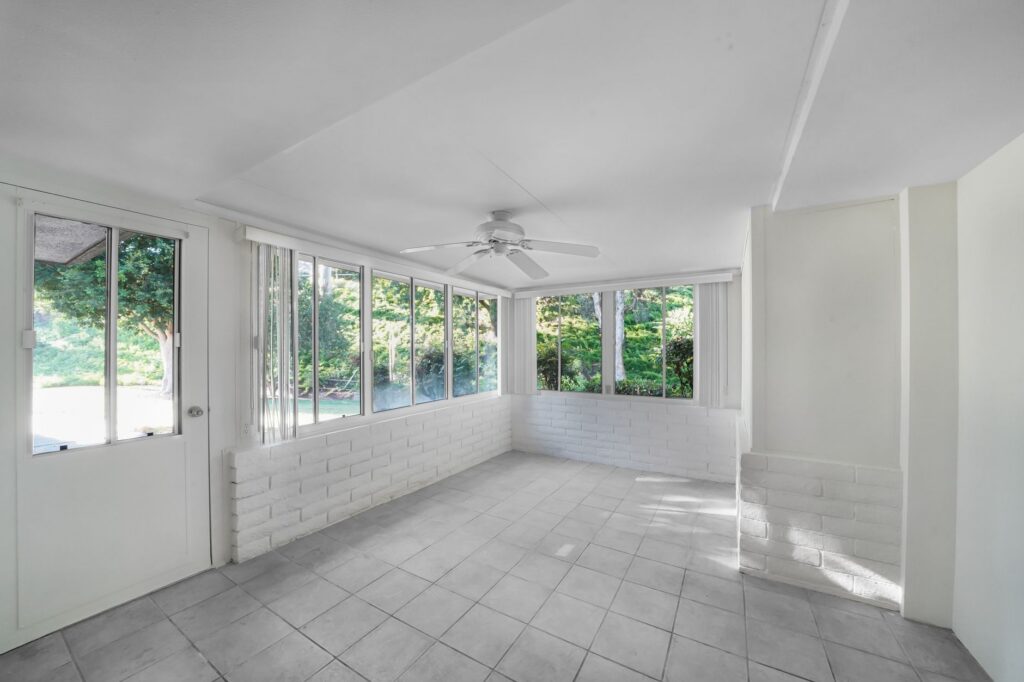
Sunroom Heating Options for Cold Months
Yes, a sunroom can absolutely be used in winter with the right heat source. Radiant floor heating is a favorite for sunrooms because it warms the surfaces you actually touch and rises evenly without blowing dust or drying the air. It runs quietly beneath tile or engineered flooring and pairs beautifully with the calm, bright feel of a glass-walled room.
If radiant floors are not in the budget, a mini-split reverses in winter to provide efficient heat, giving you one system that handles both seasons. Electric baseboard units, a small gas fireplace, or a freestanding electric heater can supplement on the coldest nights. The best heating choice comes down to how often you use the room in winter and how well the space holds warmth once it is heated, which brings insulation into the picture.
Sunroom Insulation Tips That Make the Biggest Difference
Insulation is where comfort becomes affordable, because a well-sealed room needs far less energy to stay pleasant. Start with the glass itself: double-pane thermal glass with an insulating gas fill dramatically slows heat transfer compared to single-pane windows and is the single highest-impact upgrade for most sunrooms. Thermal glass keeps summer heat out and winter warmth in, doing double duty every day.
Beyond the windows, seal every gap where the sunroom meets the main house and where framing meets the foundation, since air leaks quietly undo everything else. Insulate the roof or ceiling cavity generously, because a large share of heat gain and loss happens overhead. Adding cellular shades and quality weatherstripping rounds out an envelope that stays steady with minimal mechanical help. For a broader look at building for our regional conditions, the ideas in best materials for outdoor kitchens in Louisiana’s climate carry over well to sunroom construction.
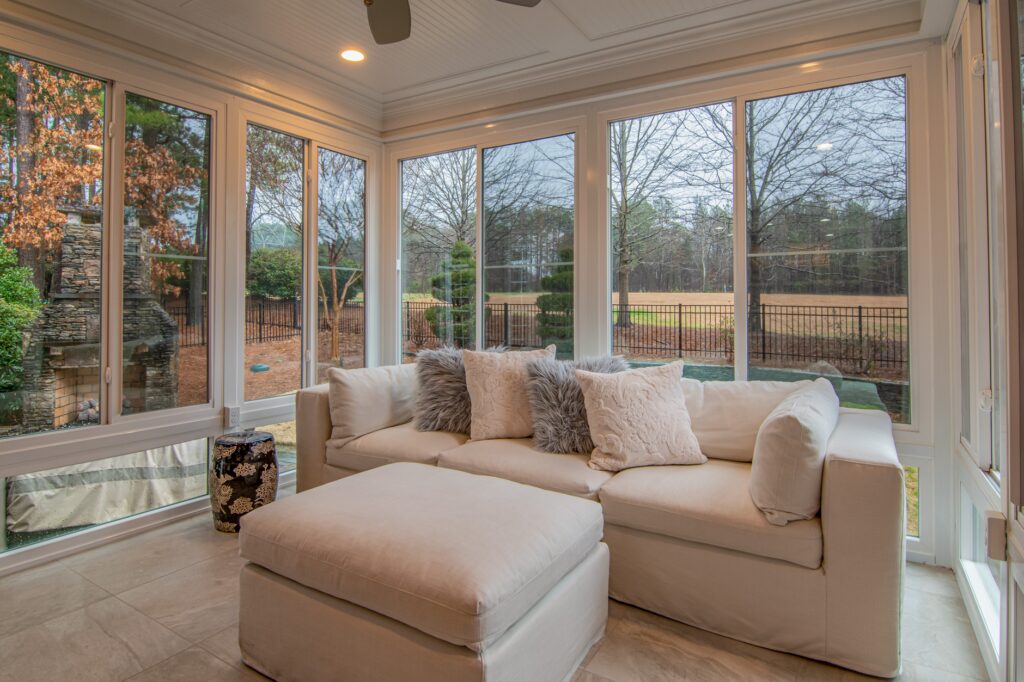
Comparing Cooling and Heating Solutions
The table below breaks down six popular ways to control sunroom temperature, so you can weigh cooling power, heating value, cost, and climate fit side by side. Most comfortable sunrooms combine two or three of these rather than relying on a single fix. Think of it as layering: one solution reduces the load, another actively conditions the air, and a third seals the room so it holds the result.
| Solution | Cooling Benefit | Heating Benefit | Cost Range | Best Climate |
|---|---|---|---|---|
| Ceiling Fans | Moves air for a cooler feel | Reverses to push warm air down | $100 to $400 | Warm and mild regions |
| Mini-Split HVAC | True air conditioning | Efficient reverse-cycle heat | $2,000 to $5,000 | All climates |
| Radiant Floor Heating | None | Even, quiet, comfortable warmth | $1,500 to $6,000 | Cold winters |
| Thermal Glass | Blocks solar heat gain | Retains indoor warmth | $$ per window upgrade | All climates |
| Cellular Shades | Reduces incoming sun | Traps air for insulation | $40 to $150 per window | Hot and cold climates |
| Tinted Glass | Cuts glare and heat | Minor retention benefit | $5 to $15 per sq ft | Hot, sunny regions |
Keeping a Sunroom Comfortable in New Orleans Heat and Humidity
Our local climate raises the stakes on cooling, because New Orleans summers combine intense sun with heavy humidity that makes any warm room feel worse. Here, a mini-split earns its keep by both cooling the air and pulling out moisture, which prevents the sticky, damp feeling that ceiling fans alone cannot fix. We routinely recommend humidity-aware sizing so the system dehumidifies without short-cycling.
Tinted or low-E glass is nearly essential on south and west walls in our region, and generous roof insulation keeps the afternoon sun from radiating down onto you. A properly built sunroom designed for Gulf Coast conditions stays comfortable when the heat index climbs, and the team at Big Easy Outdoor Design plans every one around our specific weather rather than a generic template. For inspiration on blending the space into a smaller lot, see our ideas for compact New Orleans backyards.
Which Sunroom Is Easiest to Keep Comfortable
If year-round comfort is your top priority, a fully insulated four-season sunroom with thermal glass and its own heating and cooling is the easiest to control, because it is built like a true room rather than a glass porch. Three-season rooms cost less but rely on shades and fans, so they shine in spring and fall while asking more of you in the extremes. Matching the build to how you plan to use the space is the real secret to lasting comfort.
Big Easy Outdoor Design begins every project with a free consultation to map out glazing, insulation, and climate systems as one plan, so nothing gets bolted on later. When you are ready to build a sunroom that feels great in every season, reach out to our team or call (504) 596-8647 to get started.
Frequently Asked Questions
How do I keep my sunroom cool in summer?
Block heat before it enters using tinted or low-E glass and cellular shades, then cool the room with ceiling fans and a mini-split. Combining heat-blocking glazing with active cooling is the most reliable way to stay comfortable through hot afternoons.
Can a sunroom be used in winter?
Yes, a properly insulated sunroom with thermal glass and a heat source is comfortable all winter. Radiant floor heating or a reverse-cycle mini-split keeps the room warm, while good sealing prevents the heat from escaping.
What is the best way to heat a sunroom?
Radiant floor heating provides the most even and comfortable warmth, and a reverse-cycle mini-split is the most versatile since it heats and cools with one system. The best choice depends on your budget and how often you use the room in cold weather.
How do I improve sunroom insulation?
Upgrade to double-pane thermal glass, seal every gap where the room meets the house and foundation, and insulate the roof cavity generously. Adding cellular shades and weatherstripping further reduces heat transfer and keeps temperatures steady.
What type of sunroom is easiest to keep comfortable?
A four-season sunroom with thermal glass, full insulation, and dedicated heating and cooling is the easiest to keep comfortable year round. It is built like a true interior room, so it holds temperature far better than a three-season porch.
Do I need air conditioning in a sunroom in a humid climate?
In humid regions like New Orleans, a mini-split is highly recommended because it both cools and removes moisture. Fans alone move air but cannot lower humidity, so an air conditioning system is what keeps the space from feeling sticky.