Poolside decking takes more abuse than almost any other surface in a New Orleans backyard. It sits in direct sun for most of the day, gets splashed constantly, and has to stay safe to walk on with bare, wet feet. Picking the wrong material means a deck that gets too hot to stand on by midsummer or turns slick the moment it gets wet.
Big Easy Outdoor Design builds poolside decking as part of its outdoor living projects across New Orleans, and material choice is usually the first real decision homeowners have to make. The homepage at bigeasyoutdoordesign.com shows the range of outdoor spaces the team designs, and a free design consultation is the best way to find out which decking material fits your pool and your budget.
Which Decking Materials Stay Coolest Underfoot?
Light-colored concrete, travertine, and certain composite decking products stay noticeably cooler in direct sun than dark pavers, dark composite, or traditional wood, since lighter surfaces reflect more heat instead of absorbing it. Color matters as much as material type here. A light gray or tan finish on nearly any material will outperform a dark version of the same product on a hot New Orleans afternoon.
Travertine in particular has a reputation for staying cool because of its natural porous surface, which is part of why it shows up so often around pools in warm climates. Composite decking has improved in this area too, with newer capped composite products designed specifically to resist the heat buildup that gave early composite decking a bad reputation near pools.
A quick test before committing to a material is worth doing whenever possible. Sample boards or paver tiles left in direct sun for an afternoon give a far more honest read on surface temperature than a showroom sample kept indoors. Homeowners who skip this step sometimes end up with a beautiful deck that nobody wants to walk across barefoot by July.
What Makes a Pool Deck Surface Slip-Resistant?
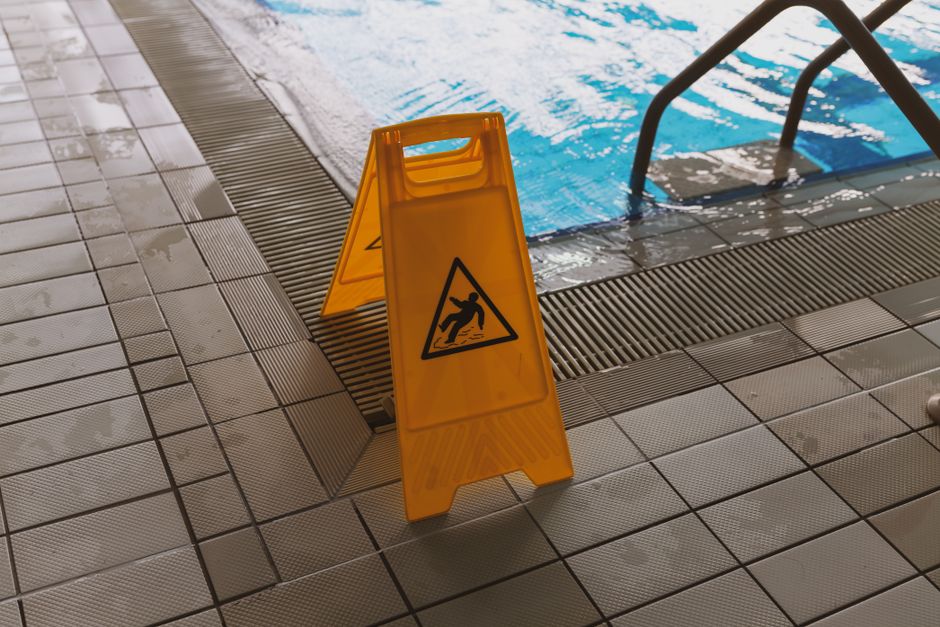
A textured, non-polished finish is what actually prevents slipping around a pool, not the material itself, since smooth versions of almost any decking material become dangerous when wet. Brushed concrete, textured pavers, and composite boards with a raised grain pattern all provide the traction bare feet need near water.
Polished stone and smooth poured concrete look clean in photos but turn into a real hazard the moment they get splashed. Any material being considered for poolside decking should be evaluated specifically in its wet-rated, textured finish, not the smooth version sometimes shown in showroom displays.
Manufacturers usually publish a slip-resistance rating for pool-specific products, and it is worth asking to see that documentation rather than relying on how a sample feels dry in a showroom. A texture that seems only mildly rough indoors can behave very differently once it is wet and someone is walking across it quickly on a hot day.
How Does New Orleans Humidity Affect Pool Deck Material Choice?
High humidity accelerates mold and algae growth on porous materials, so poolside decking in New Orleans needs either a naturally resistant material or regular sealing to stay safe and clean. Natural stone and concrete both need periodic sealing to keep moisture from working into small pores, where algae can take hold and create slick, green patches.
Composite decking generally resists mold better than wood or unsealed stone, since it does not absorb water the same way. Wood, while sometimes chosen for its look, tends to need the most maintenance around a pool in a humid climate and is the material most likely to develop slip hazards from algae growth between cleanings.
Concrete, Pavers, or Composite: Which Fits a New Orleans Pool Best?
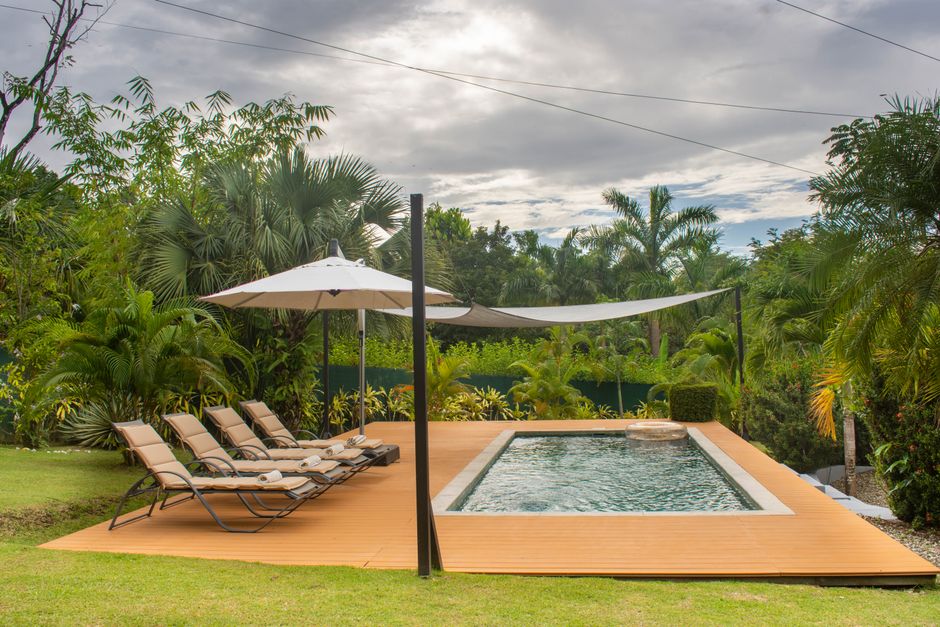
Concrete offers the lowest upfront cost and a clean, modern look, pavers give more design flexibility with repairable individual pieces, and composite decking works best when the deck sits above grade or connects to a raised, above-ground pool structure. Each material fits a different type of pool and budget.
Stamped or brushed concrete works well for in-ground pools with a straightforward deck layout. Pavers make sense when a homeowner wants a specific pattern or the ability to replace a single damaged section without redoing the whole deck. Composite decking is the natural choice when the pool sits above ground or the deck needs to bridge uneven grade, since it can be built on a raised frame the way concrete and pavers cannot.
Budget conversations often start with material cost per square foot, but total project cost depends just as much on site prep, drainage work, and how much grading the yard needs before installation begins. A yard with significant slope or poor existing drainage can shift the real cost comparison between materials, which is another reason an on-site assessment gives a more accurate picture than an online price list.
Does Poolside Decking Need Extra Drainage Planning?
Yes, poolside decking needs a slight slope away from the pool and proper drainage channels, since standing water around a pool deck creates both a slip hazard and a place for algae to grow. Drainage planning matters even more in New Orleans, where heavy rain can overwhelm a poorly graded deck in a single afternoon storm.
A deck that traps water near the pool’s edge also puts extra strain on the material itself, since standing water accelerates staining and surface breakdown regardless of material type. Getting the grading and drainage right during installation is one of the parts of a pool deck project that is far cheaper to handle upfront than to fix after the fact.
Deck drains, channel grates near the pool coping, and a subtle slope built into the base layer all work together to move water away before it pools on the surface. This groundwork happens before any decking material is installed, which is why a thorough site assessment early in the design process matters more than the finish choice that comes later.
Choosing poolside decking comes down to balancing heat, traction, and humidity resistance against the look and budget a homeowner wants. Big Easy Outdoor Design walks through all three factors on-site, so the material recommendation matches the actual pool and yard rather than a generic pick.
If you are planning a pool deck project, contact Big Easy Outdoor Design to schedule a free design consultation and compare materials for your specific backyard.
Frequently Asked Questions
What is the coolest decking material for a New Orleans pool deck?
Light-colored concrete and travertine tend to stay coolest underfoot in direct sun, since their lighter surfaces reflect heat rather than absorbing it. Dark materials, including dark composite decking, retain significantly more heat during a New Orleans summer afternoon.
Is composite decking safe to use around a pool?
Yes, modern capped composite decking with a textured, slip-resistant finish works well around pools and resists mold better than untreated wood. Big Easy Outdoor Design recommends confirming the specific product is rated for wet, high-traffic pool areas before installation.
How often does poolside decking need to be resealed?
Natural stone and concrete typically need resealing every one to three years in a humid climate like New Orleans, depending on sun exposure and pool chemical contact. Composite decking generally does not require sealing at all.
Can pavers be repaired if one cracks near the pool?
Yes, one of the advantages of paver decking is that a single damaged or stained paver can be replaced without disturbing the rest of the deck. This makes pavers a practical choice for pool areas that see heavy foot traffic.
Does pool deck material affect the pool’s overall safety?
Yes, slip resistance is a major safety factor, and a smooth or polished surface around a pool significantly increases fall risk when wet. Big Easy Outdoor Design prioritizes textured, wet-rated finishes for every poolside decking project.
How does New Orleans humidity change pool deck maintenance?
Humidity speeds up mold and algae growth on porous surfaces, so poolside decking in New Orleans generally needs more frequent cleaning and sealing than the same material would in a drier climate. Choosing a resistant material upfront reduces this maintenance burden.
Get Expert Help Choosing Your Pool Deck Materials in New Orleans
The right poolside decking keeps your deck cool, slip-resistant, and easy to maintain through New Orleans heat and humidity, so it holds up the way you expect it to for years.
Big Easy Outdoor Design designs and builds outdoor living spaces across New Orleans, Metairie, Kenner, Slidell, Jefferson Parish, and St. Tammany Parish. Visit the homepage to see the full range of projects the team builds.
Ready to get started? Reach out or call 504-596-8647 to schedule your free design consultation.