Key Takeaways
- Standing water on a New Orleans patio almost always traces back to one of four causes: flat grading, dense clay soil, impermeable surfaces, or a low spot overwhelmed by heavy rain.
- The right fix depends entirely on which cause is actually at work — regrading, a French drain, permeable pavers, or a catch basin.
- Our clay soil and high water table mean water has nowhere obvious to go, so drainage has to be designed rather than assumed.
- Permeable pavers solve the problem at the material level by letting water filter through instead of sheeting across the surface.
- A catch basin is the usual answer for a stubborn low spot, especially where a downspout empties near the patio.
Standing water on a New Orleans patio almost always traces back to one of four causes: flat grading, dense clay soil, impermeable surfaces, or a low spot overwhelmed by heavy rain. The right fix, whether that’s regrading, a French drain, permeable pavers, or a catch basin, depends entirely on which cause is actually at work in your yard.
Why New Orleans Backyards Hold Onto Water Longer Than Most
If your patio turns into a shallow pond after every summer storm, the problem usually has little to do with bad luck. Cities across the Gulf Coast get heavy rain, but few share New Orleans’s mix of flat ground, clay soil, and a water table sitting close to the surface most of the year. Water simply has nowhere obvious to go.
Our team at Big Easy Outdoor Design walks properties every rainy season where the patio slopes the wrong way, the yard has no low point to drain toward, or the soil stays so saturated that even a light shower turns the grass spongy. None of that is unusual here. It is the baseline condition of the city.
New Orleans also depends on an enormous mechanical pumping system just to keep ordinary rain from becoming a flood. The Sewerage and Water Board’s pumps are built to remove about 1 inch of rain in the first hour of a storm and roughly half an inch per hour after that. When a downpour outpaces that rate, or a yard sits below street grade, standing water backs up long before it ever reaches a city drain.
Cause One: Flat Lots and Grading That Sends Water Nowhere
Most New Orleans lots were built with barely any slope to begin with, and decades of settling have flattened many of them further. A patio should drop roughly a quarter inch per foot, moving away from the house for at least six to ten feet, so rain has a clear path off the surface. When that slope is missing, or has reversed over time, water pools right where people want to sit.
Regrading is often the simplest and most lasting fix. A contractor can reshape the soil beneath a patio, or rebuild the surface itself with the correct pitch, directing water toward a swale, garden bed, or drain instead of the back door. It is worth handling before any new patio goes in, since a flat base will simply repeat the same puddling later.
For yards where regrading is impractical, a raised structure sidesteps the problem entirely. Some homeowners choose an elevated deck over a stubborn low spot rather than fight the grade, since a deck sits above the ground and does not depend on soil pitch at all. If you are weighing patio layout more broadly, our guide to patio design basics covers how grading decisions shape the rest of the project.
Cause Two: Clay Soil That Won’t Let Water Through
Much of New Orleans sits on soil locals sometimes call gumbo, a dense mix of clay, silt, and organic material left behind by centuries of river flooding. It absorbs water at a rate of only about 0.1 to 0.5 inches per hour, far slower than sandy or loamy soil found elsewhere. Once that thin surface layer saturates, additional rain has nowhere to go but sideways, or up.
A French drain addresses this directly. It is a gravel filled trench with a perforated pipe buried below the surface, typically 18 to 24 inches deep in New Orleans yards, positioned to intercept water before it reaches a patio, foundation, or low spot and carry it to a safer discharge point. Unlike surface level fixes, a French drain works with the clay instead of trying to change it.
This matters most for anyone planning a yard that also needs to stay attractive without constant upkeep. If clay soil is already limiting what will grow or drain well nearby, it is worth reading our thoughts on a low-maintenance backyard built for New Orleans’s climate before finalizing a drainage plan.
Cause Three: Impermeable Surfaces That Trap Rainfall
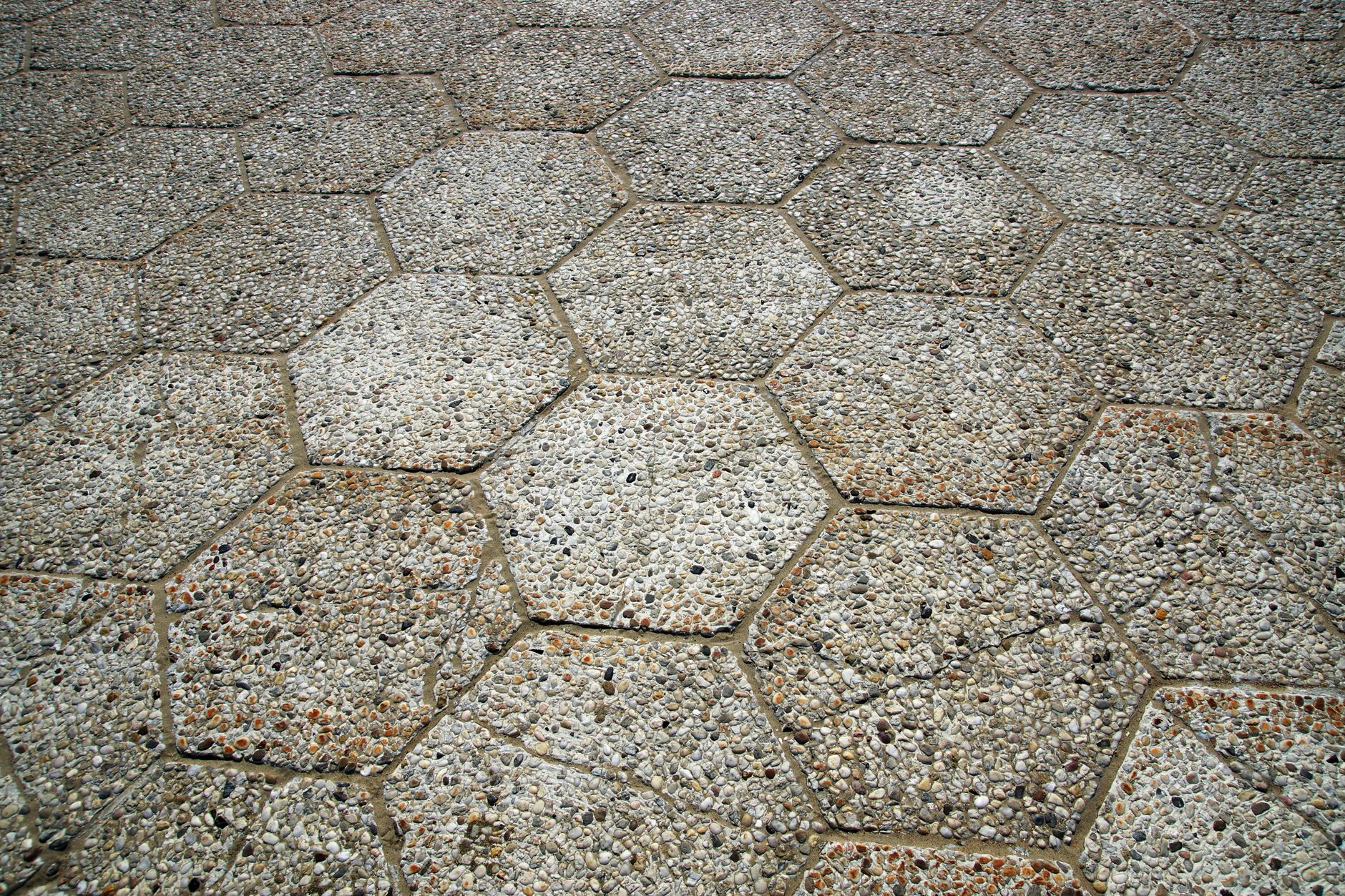
Solid concrete or tightly mortared stone looks clean, but it also means every drop of rain that lands on the patio has to run off somewhere else instead of soaking in. In a yard that is already flat and clay heavy, that runoff frequently just resettles a few feet away.
Permeable pavers solve this at the material level. They are set with open joints over a gravel base, so water passes through the surface and filters into the ground gradually instead of sheeting across it. A well designed patio can incorporate permeable sections in exactly the spots where water tends to collect.
This approach matters even more on tight New Orleans lots, where there is less open yard to absorb runoff in the first place. If your backyard is on the smaller side, our piece on clever design ideas for compact New Orleans backyards covers how permeable surfaces and smart layout work together when space is limited.
Cause Four: Low Spots, Downspouts, and a City System Already Working Hard
Every yard has a lowest point, and in New Orleans that point often lines up with where a roof downspout empties or where two grading lines meet. Add a downspout dumping straight onto the patio, and a small drainage issue becomes a standing puddle that can last for days given how slowly the local clay drains.
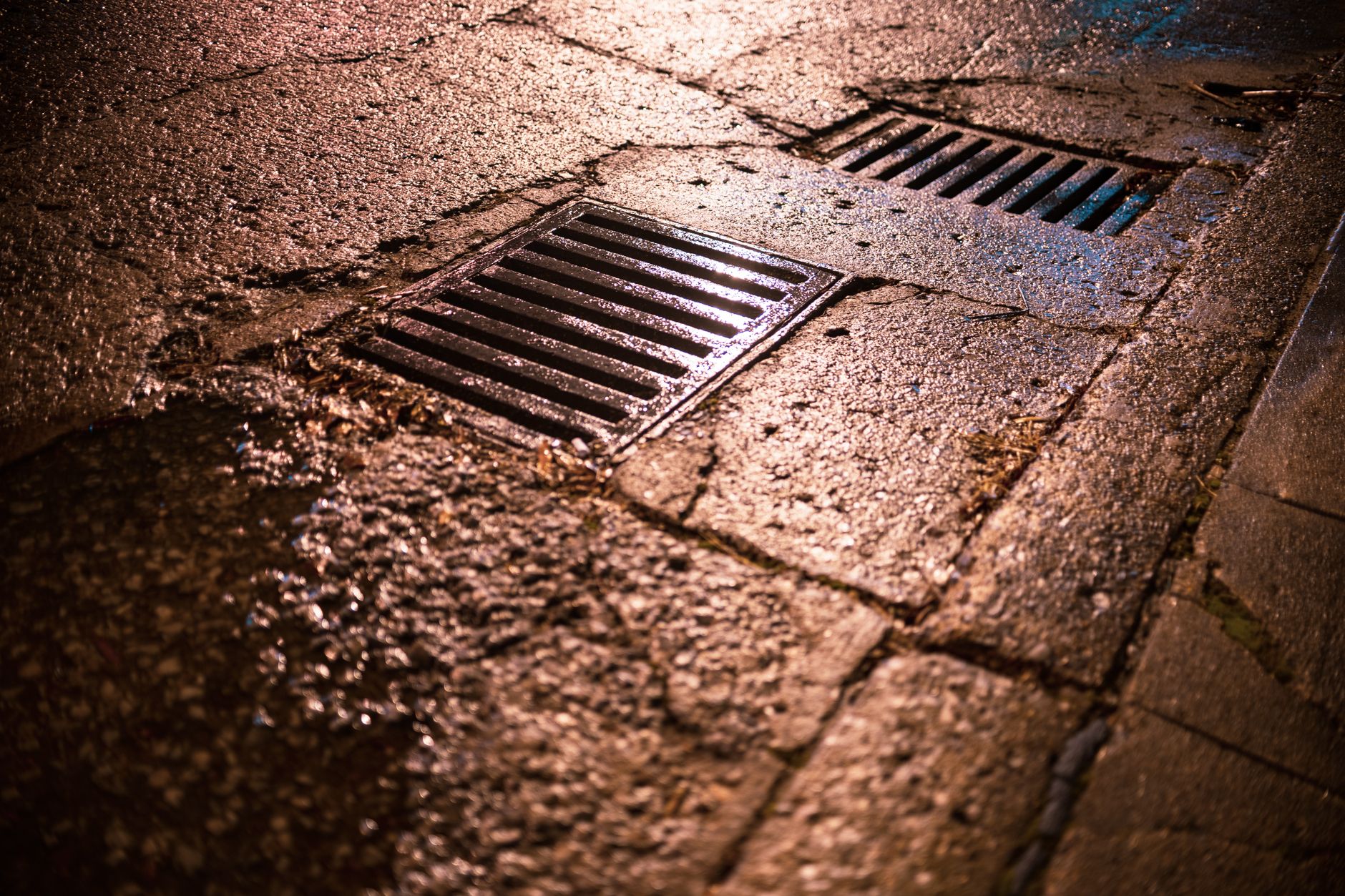
A catch basin is built for exactly this scenario, and it is one of the most requested add-ons Big Easy Outdoor Design installs for yards with a stubborn low spot. It is a grated surface inlet connected to underground piping that carries collected water to a safe discharge point, much like the storm drains found throughout the city, just sized for a yard. Extending downspouts five to ten feet away from the patio before they discharge also reduces the volume a catch basin has to handle.
Solving this at the property level matters because the city’s own pumps are not designed for unlimited capacity. Homeowners weighing this investment often want a sense of scale first, and our breakdown of patio cost in New Orleans is a useful starting point for budgeting a project that includes drainage work.
Matching the Fix to the Cause
The mistake we see most often is a homeowner installing one fix, usually gravel or a single drain, without diagnosing which cause is actually driving the standing water. A French drain will not help a patio that is simply pitched the wrong way, and regrading alone will not fix soil that cannot absorb water fast enough.
The more reliable approach starts with watching where water sits after an ordinary rain, not just a major storm. Water pooling right against the house points to grading. Water that lingers across the whole yard for days points to clay soil and a French drain. Water collecting on the patio surface itself points to impermeable material, and a single spot that floods first points to a catch basin.
Many New Orleans projects end up combining two or three of these, a graded French drain feeding a catch basin, or permeable pavers paired with better grading. If you are also considering a deck instead of a patio in a wet section of yard, our guide to the best decking materials for humid climates explains which options hold up where moisture is constant.
Big Easy Outdoor Design typically starts every drainage conversation with a walk of the property, because the right fix depends entirely on which cause is at work.
Frequently Asked Questions
Why does my New Orleans backyard flood more than a similar yard in another city?
New Orleans combines flat, low-lying terrain with dense clay soil and a high water table, so rain has almost nowhere to drain naturally. Even a yard with decent grading can hold water longer here than the same yard would in a hillier or sandier region. Local infrastructure helps, but it was never meant to replace on-site drainage.
What is the best drainage solution for a patio that is already built?
For an existing patio, a French drain or catch basin installed along the low edge is usually the most practical fix, since neither requires tearing out the surface. Regrading around an existing patio is still possible and works best when combined with one of these subsurface options. The right choice depends on whether the water is coming from below or pooling on top.
How deep does a French drain need to be in New Orleans clay soil?
Most French drains in New Orleans yards are installed 18 to 24 inches deep, which is enough to intercept water before it reaches a foundation or patio base. Going shallower often means the drain fills faster than it can carry water away. Depth also depends on where the water table sits on a given property.
Do permeable pavers actually work in heavy clay soil?
Yes, but they need a properly built gravel base beneath them to perform well in clay conditions, since the base does the work the clay cannot. Without that base, permeable pavers can still pool water on the surface. Paired with correct grading, they are one of the more effective options for New Orleans yards.
How much slope does a patio need for good drainage?
A patio should slope about a quarter inch per foot, moving away from the house, for at least six to ten feet from the foundation. That grade is enough to move rainwater off the surface without being noticeable underfoot. Less slope than that is a common reason patios hold water after a storm.
Can I fix patio drainage problems myself, or do I need a professional?
Simple fixes, like extending a downspout or clearing a clogged drain, are reasonable do-it-yourself projects. Grading, French drains, and catch basins involve excavation, proper pitch, and connecting to a safe discharge point, so most homeowners get a longer-lasting result working with a professional. A short site visit is usually enough to tell which category a given yard falls into.
Ready to Stop Fighting Standing Water?
A soggy patio does not have to be a permanent part of your backyard. Big Easy Outdoor Design offers free consultations to walk your property, diagnose exactly what is causing the water to sit, and recommend a fix built for your yard’s grading, soil, and drainage needs. Contact Big Easy Outdoor Design or call (504) 596-8647.