
Key Takeaways
- Evergreen and near-evergreen vines rated for USDA zone 9b are the ones that actually hold up on a New Orleans pergola.
- Confederate jasmine and crossvine cover a structure fastest, and both take our humidity without sulking.
- Coral honeysuckle and muscadine grape are Louisiana natives — one feeds pollinators, the other gives you shade and fruit.
- Evergreen wisteria is the better-behaved stand-in for classic wisteria, which can overwhelm a pergola it was not built for.
- Bougainvillea brings the boldest colour but needs a protected spot to come through winter reliably.
- Whatever you plant, the pergola itself has to be built to carry the mature weight of the vine.
The best climbing plants for a pergola in New Orleans are evergreen or near-evergreen vines built for USDA zone 9b, including confederate jasmine, crossvine, coral honeysuckle, muscadine grape, evergreen wisteria, and bougainvillea in a protected spot. Each brings a different bloom season, growth habit, and maintenance level, so pairing two or three extends color and shade across the year.
What to Look For in a Pergola Vine in New Orleans
New Orleans sits in USDA hardiness zone 9b, with humid summers, mild winters, and roughly 62 inches of rain a year. A vine that struggles with root rot or fungal leaf spot here looks ragged by August no matter how good it looked on the nursery tag. The plants that hold up share a few traits: tolerance for wet soil, resistance to leaf fungus, and a habit you can train rather than one that takes over.
At Big Easy Outdoor Design, we hear from homeowners who want a pergola that looks finished the day it’s built, then gets better as vines fill in over a season or two. The right choice depends on sun exposure, whether you want scent, color, fruit, or fast coverage, and how much pruning you want.
A pergola’s spaced rafters give vines something to grip and enough dappled light for flowering varieties, one reason we walk clients through our pergola vs. gazebo comparison before choosing a structure.
Confederate (Star) Jasmine: Fragrant and Fast to Cover
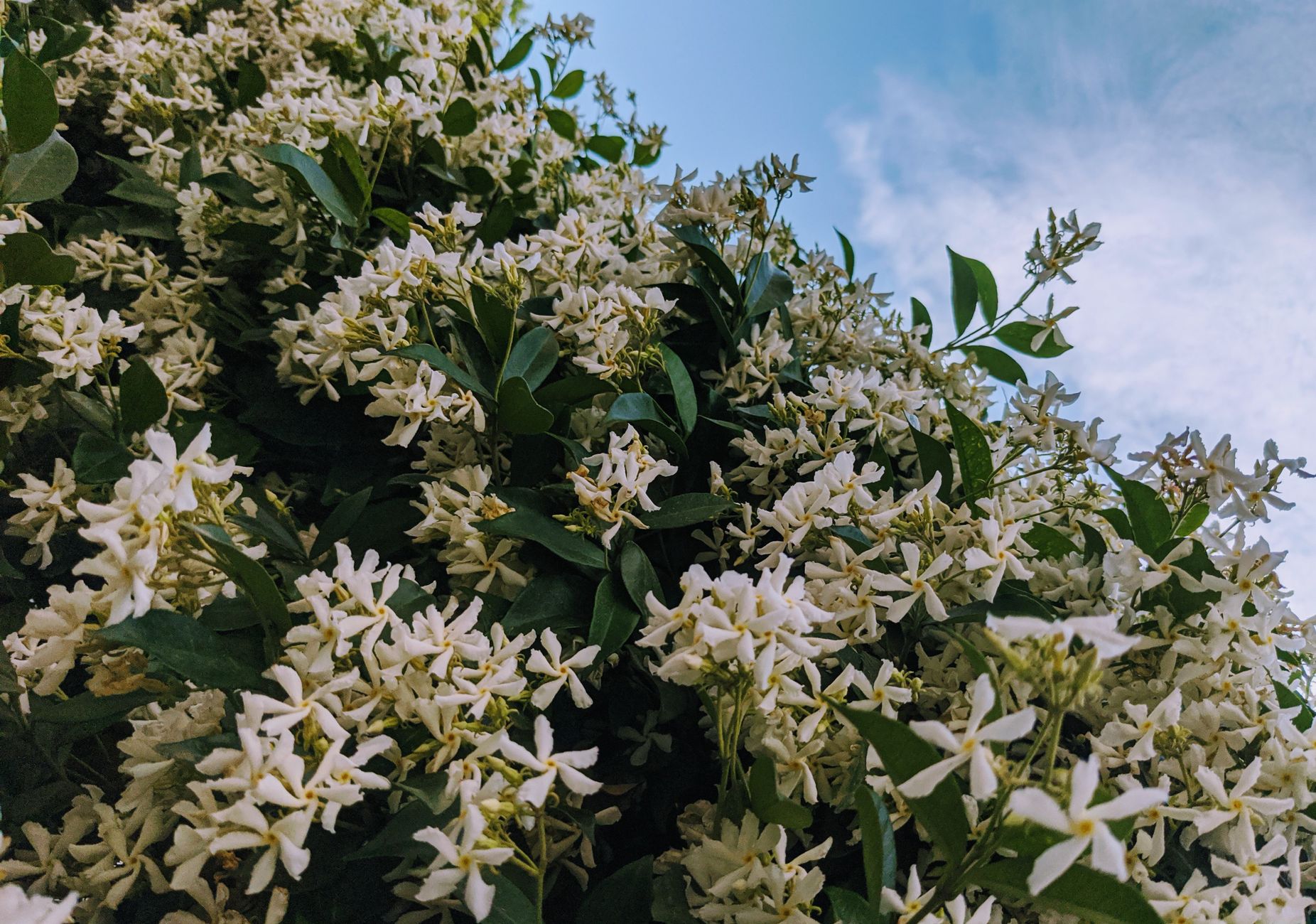
Confederate jasmine, also called star jasmine (Trachelospermum jasminoides), is a broadleaf evergreen vine hardy through zone 9b and into zone 8a. It stays evergreen most winters here, though leaves can bronze in a hard freeze before greening back up in spring.
Give it full sun to light shade and well-drained soil, and expect 12 to 24 inches of growth a year, eventually reaching 15 to 20 feet. Its small white flowers open in late spring and carry a sweet fragrance that settles into a courtyard on a still evening, worth weighing near an evening seating area, like the ones in our guide to designing a tranquil garden space.
Water deeply the first year, then let established plants ride out normal rainfall. Twining stems wrap posts on their own, though rafters usually need occasional tying until the vine catches hold.
Crossvine: Louisiana Native with Reliable Color
Crossvine (Bignonia capreolata) is native to the Gulf South and rated for zones 6 through 9, putting New Orleans in its comfort range. It holds its leaves through most winters, turning bronze-purple in a cold snap rather than dropping bare.
It tolerates full sun or partial shade and adapts to moist or average soil, useful since New Orleans clay can go from dry to waterlogged after a downpour. Established vines climb fast, often 20 feet or more, with trumpet-shaped red-orange flowers in spring that draw hummingbirds.
Crossvine clings with adhesive tendrils, needing no wires or ties once started, one reason it shows up in our low-maintenance backyard ideas for New Orleans heat. Occasional thinning keeps it from building up woody growth at the base.
Coral Honeysuckle: Native and Pollinator-Friendly
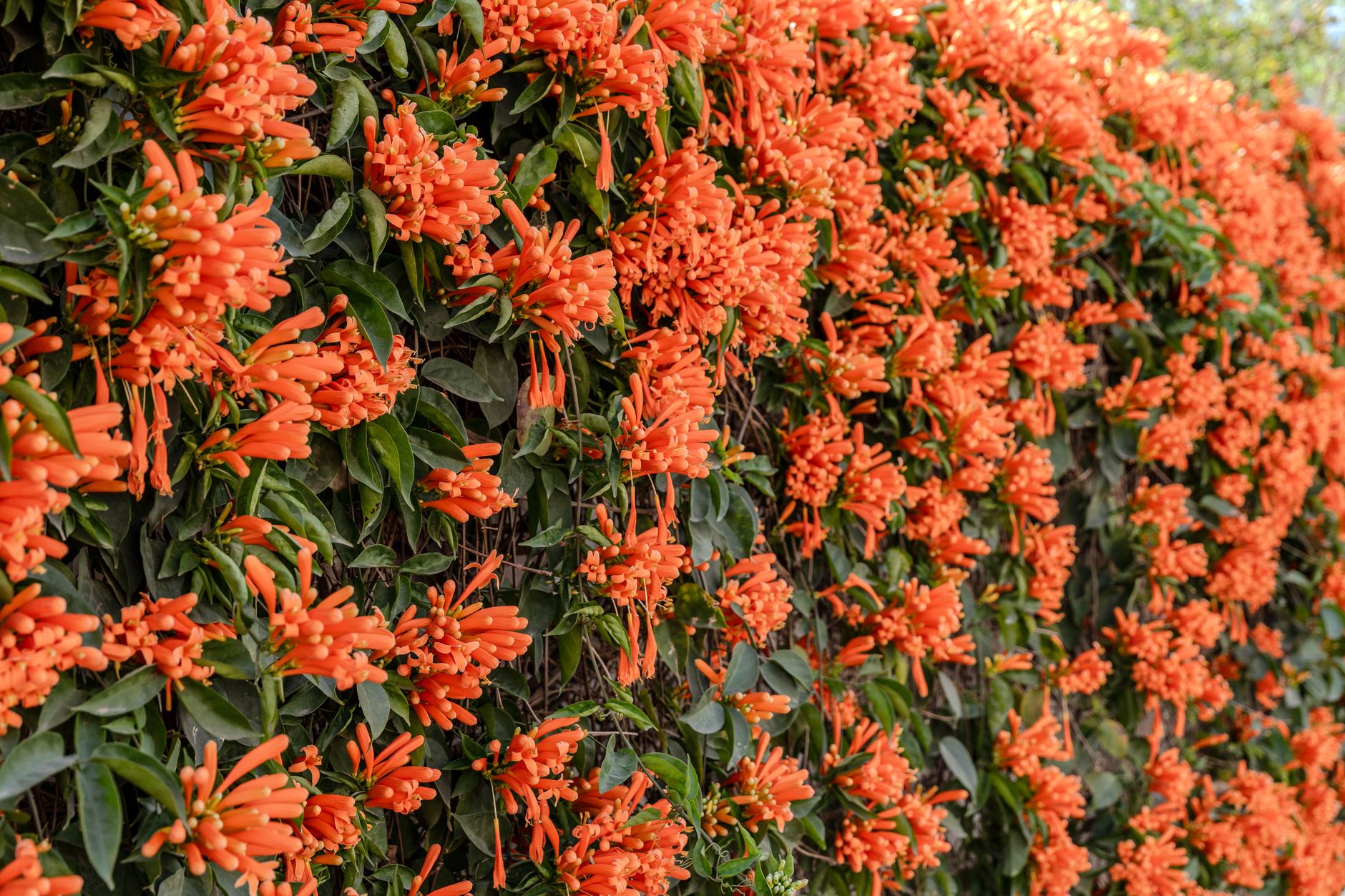
Coral honeysuckle (Lonicera sempervirens) is hardy from zone 4 through 9 and beyond, so New Orleans winters pose no real threat. Its species name means evergreen, and it stays semi-evergreen to fully evergreen in zone 8 and warmer, thinning only in an unusually cold winter.
It prefers full sun for the best bloom but tolerates part shade, and it’s less aggressive than invasive Japanese honeysuckle sold at some big-box stores. Tubular red-orange flowers appear in spring with repeat flushes into fall, feeding hummingbirds without the rampant spread of its cousin.
Because it stays restrained, coral honeysuckle works whether you land on a full-size pergola or a smaller garden arbor, a decision our pergola vs. arbor breakdown can help clarify. Light annual pruning after the first bloom flush keeps it tidy.
Muscadine Grape: Fruit, Shade, and Real Louisiana Roots
Muscadine grape (Vitis rotundifolia) is native to the Gulf states and thrives in zones 7 through 10, tolerating New Orleans winters without protection and handling humidity better than European wine grapes. The LSU AgCenter has long recommended muscadines for home gardeners because they resist fungal diseases common to other grapes in wet climates.
Give muscadines full sun, at least six to eight hours a day, and well-drained, slightly aci