
Mosquitoes in your backyard start with standing water. The CDC advises emptying and scrubbing, turning over, covering, or throwing out anything that holds water once a week. In New Orleans, the city’s Mosquito, Termite and Rodent Control Board also targets containers, clutter, and trash around homes, so good yard design and a weekly habit work together.
Few things cut an evening on the patio short faster than a cloud of mosquitoes. You cannot control the whole neighborhood, but you can control what your own yard offers them. Most of that comes down to water: where it sits, how long it stays, and whether the layout gives it a place to collect.
Big Easy Outdoor Design builds outdoor living spaces around how families actually use them, and fewer bites is part of that. Here is what to do this week, and what to think about the next time you change your yard.
What Should You Do About Mosquitoes Right Now?
Walk the yard and remove standing water. The CDC says to check for water-holding containers both indoors and outdoors, then, once a week, empty and scrub, turn over, cover, or throw out anything that holds water. That one habit removes places where mosquitoes lay eggs.
The CDC’s list of common culprits is a good starting checklist:
- Tires and buckets
- Toys and kiddie pools
- Birdbaths and flowerpot saucers
- Trash containers and their lids
The CDC pairs emptying with scrubbing, so give each container a quick scrub instead of only tipping it out. Pick one day a week and make the walk-around part of your routine. After a heavy storm, an extra check is worth the few minutes it takes.
How Does New Orleans Fight Mosquitoes Citywide?
The New Orleans Mosquito, Termite and Rodent Control Board uses integrated mosquito management. The board describes that approach as surveillance, public education, larval habitat reduction, and chemical control of both larval and adult mosquitoes.

Larval source reduction is the part homeowners can help with most. The Mosquito, Termite and Rodent Control Board says it involves inspecting and removing man-made containers, including tires, along with clutter and trash around homes. For sites that cannot be removed or drained, the board uses biorational larvicides.
The board also treats adult mosquitoes at the yard, block, or neighborhood level using sprayers, trucks, and airplanes. Residents can sign up on the board’s site for spray notifications, and the office can be reached at (504) 658-2400 on weekdays.
Your own yard work and the city’s programs support each other. Removing containers at home means fewer places the board has to treat on your block.
Disease risk is part of why this work matters. In November 2025, the board reported that mosquito samples collected on the East Bank of Orleans Parish tested positive for West Nile virus.
Where Does Water Hide in a Typical Backyard?
Water hides in low spots, clogged gutters, sagging covers, and anything shaped like a bowl. Patios that slope toward the house, flat areas where puddles linger, and plant saucers under containers are common trouble spots after a summer storm.
Some features are easy to miss:
- Folded tarps and grill covers that collect rain in their creases
- Wheelbarrows, watering cans, and buckets left upright
- Rain barrels without a tight cover or screen
- Drain grates and corners where leaves trap water
If puddles stay on your patio for days after rain, the surface itself may be part of the problem. Our guide to patio drainage solutions for New Orleans backyards explains how grading and drains move water away.
Can Yard Design Reduce Mosquito Problems?
Design will not stop every mosquito. It can remove the spots where water sits. Patios graded to shed water, drains sized for heavy rain, and fewer loose containers all cut down on breeding sites.
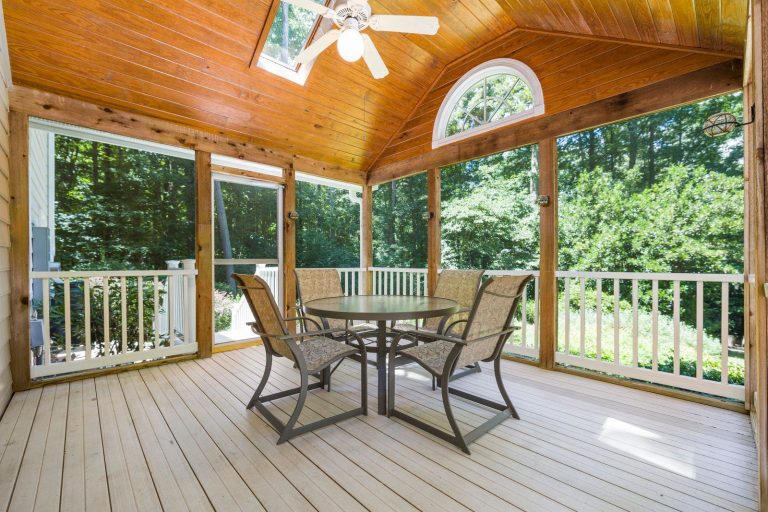
When planning new hardscape, ask where every rainstorm will go. Water should run away from the house and toward a drain, a planted bed, or the street. A flat corner that stays wet is an open invitation.
Covered structures need the same attention. A pergola shade cloth, a gutter on a patio cover, or a flat roof panel can hold water if it sags. Pi